Monday, March 18, 2013

Progress and Change

Two roads diverged in a yellow wood,
And sorry I could not travel both
And be one traveler, long I stood
And looked down one as far as I could
 . . . .
Robert Frost

Change and progress are both considered inherently good things today.  But what if they were not equally good?  Which would we choose?  What if we could have progress without change or change without progress?  Is it possible to have either good or bad change?

To answer the last question first, YES.  It is equally possible for change to be either good or bad.  Different individuals or cultures might extend a multitude of definitions for good change, but that does not mean that all change is equally good.  It does not even mean that all change is progress.

The two words are not synonyms.

In fact, change and progress can sometimes by antonyms.  Say, for example, that you are on a road trip from your college campus to your home for the summer.  You are progressing quite speedily toward home.  Then you come to a sign that says "DETOUR" and you must head another direction in order to reach home.  This might still be considered progress, although at a somewhat slower rate.  If, however, you instead got lost while on the detour and somehow were heading back toward college, the change would not have resulted in your progress toward home.  Quite the opposite, in fact.  You see, in order to have progress, you must have direction and an ultimate destination.  Without these two necessary conditions, there can be no progress.

So, which do we choose, change or progress?

This is somewhat of a false dilemma, since change and progress are not always opposed to each other.  Yet it is important to know the correct answer when they are in opposition.  Progress is the correct answer.  Progress is the only way to reach our end goals.  Sometimes this progress requires change; at other times, it requires us to continue on the same road at the same velocity for a very long time.  Progress is good when the end goal is good.  Change is good when it facilitates progress to a worthy goal.

The good of change in each situation must be carefully discerned by looking at a higher standard of good than mere consensus of individual opinions or acceptance by society.  God, with His moral and natural laws, is the only true standard of progress.

Wednesday, July 11, 2012

Boring and Exciting--Building Character


As the wise King Solomon once said, "Iron sharpeneth iron; so a man sharpeneth the countenance of his friend."  (Prov. 27:17 KJV)  The proverb has once again proven true in my own life since my last post, "Boring and Exciting--Synonyms?"  Another friend came to me and added a unique perspective to broaden the entire discussion.

Not only can the supposedly boring tasks of life sometimes serve as doors to the most awesome opportunities imaginable, but the mundane struggles of life also can provide the greatest possibility for personal growth.  One may illustrate the connection between the boring and the exciting by looking at the novelist's art of characterization.  To quote my friend (also unnamed): "How do you make an interesting character? Sometimes, by avoiding the things that seem obvious or 'cool.' How do you make a character seem strong? Sometimes, by giving him weaknesses. How do you make a relationship grow? Sometimes, by giving it challenges."  Weaknesses and everyday challenges often make life seem dull and unexciting; but if we approach these trials with the proper perspective, they can become the catalysts to change us--to move us from boredom to excitement.

You know those weaknesses that bog you down and make you wonder if your life will ever count toward any great purpose?  They are merely stepping stones to achieving your ultimate goal.  Each time you choose to meet a small challenge or to overcome a single bad habit, your character will grow.  You will be a stronger person for having faced difficulty and having moved beyond it.  That is where excitement comes into the picture!  As you grow your faith in God and make a daily commitment to be the person He would have you to be, you will see more clearly the purpose that He has ordained for you.  Along the way, you will face the challenges that help you to form strong relationships with the individuals God would have you to know--friendships that will lead you closer to Him and to Heaven.  Remember--"[A]ll things" (even the boring ones) "work together for good to them that love God, to them who are the called according to his purpose." (Rom. 8:28)

Accept the challenge and choose to build the godly character that God has purposed for you.

Thursday, June 21, 2012

Prayer for Serenity through the Change

God grant me the serenity to accept the things I cannot change, courage to change the things I can, and the wisdom to know the difference.

Saturday, June 16, 2012

Purpose of History

"We ought not to look back unless it is to derive useful lessons from past error, and for the purpose of profiting by dearly bought experience."--George Washington

Thursday, June 14, 2012

On Genius

The labours of men of genius, however erroneously directed, scarcely ever fail in ultimately turning to the solid advantage of mankind.--Mary Shelley, Frankenstein, 50.

. . . though that advantage may sometimes be found in learning from their mistakes (as was the case with Frankenstein).

Monday, June 11, 2012

Moral Decline in History

"History fails to record a single precedent in which nations subject to moral decay have not passed into political and economic decline."--General Douglas McArthur

Sunday, June 3, 2012

Boring and Exciting--Synonyms?

While talking to a friend recently (who will remain unnamed), I was just thinking about what makes people exciting.  It's not being able to change the world.  It's not being President of the United States or running some high-powered attorney firm.  It's doing the small things right that lead to the big things.  The things that really change a nation aren't always the things that stand out.  They're little things--like being dedicated to God, and to family, and to hard work.

The little things that are a part of good character and good relationships are also the building blocks of a strong church, a strong nation, and a better world.  Sometimes things that look boring on the surface are actually the most exciting in the long room.  It is possible to being both boring and exciting, so I am working to compile a list of some personal characteristics that are more advantageous than we might first think.  Please add your own ideas.

#1: Being willing to work hard until finishing a job rather than being sidetracked by the next shiny plan that comes along is valuable because it makes success achievable.

#2: Taking the responsibility of learning and growing for oneself rather than just expecting maturity to fall in one's lap is important because it speeds progress toward any charted goal.

#3: Learning how to really sacrifice for others that are close by rather than giving only when it is convenient and fun or only when it makes us look better to those outside our little circle enables us to make a difference locally as well as in countries around the world.

#4: Listening attentively is a skill much prized because it creates an environment suitable for growth.

#5: Being willing to sincerely apologize and quickly change when wrong removes many obstacles from the path to progress.

Don't worry if you feel boring or too normal because you do not have the noticeable talent of some others in your acquaintance.  Take responsibility.  Work hard.  Make small changes.  Some of the things that are not so glitzy at first--the things that take a lot of hard work rather than a little bit of talent--are the really important things that make the future look bright.  Maybe boring and exciting are synonyms after all.

See.  Boring things can be exciting!


Saturday, June 2, 2012

Learning from History


"Is there anyone so wise as to learn by the experience of others?"--Voltaire

Let each of us resolve to be "[one] so wise."

Thursday, May 31, 2012

Cultivating More than Gardens


“[L]et us cultivate our garden.” (Candide, 87)

Quietism is exhibited perfectly by the final decision of Candide and his band of disillusioned acquaintances to settle on a small plot of ground and stay out of trouble.  The whole idea of quietism is basically an acceptance of what seems inevitable.  It motivated by pragmatism or political apathy or even rational ignorance; but, whatever the cause, it is frightfully common in most political societies.  Quietism is more complicated than mere fearfulness and disillusionment.  Sometimes political powerlessness can make it reasonable for individuals in less representative governments to avoid involvement with government affairs.  Even in the free United States, it can be more difficult to learn about the political workings than it is worth, a situation resulting in rational ignorance.

Quietism can have monstrous results in society.  It quietly saps the strength from any resistance to political or religious evil.  Or perhaps, it would be more accurate to say that the causes of quietism sap the society of its strength.  Lacking freedom and ability to participate in government are a great hindrance to the fight against earthly evil, but an even greater tragedy is that people often choose to neglect the freedom that is open to them by ignoring the knowledge it requires.

The only way to fight evil in this world is to know the good and to do the good, especially when evil is at hand.  We cannot allow difficulty, disappointment, or lack of knowledge to hold us back from the good.  Evil can only be conquered if we relentlessly pursue knowledge of the good and change ourselves and society to conform with that highest knowledge.

[Originally written to fulfill discussion board requirements for Dr. Filiatreau's Western Literature II online summer class through Patrick Henry College.]

Monday, May 7, 2012

Importance of Traditional Education

"[A] society can be progressive only if it conserves its traditions."--Walter Lippman, The Public Philosophy, p. 136.

Saturday, December 3, 2011

Change in Living Your Story


You know, I was just sitting here knitting and thinking when I realized that there is never a finished story in my mind. It seems that every story, every book, every life I have ever heard about--no matter how satisfying the ending is--there is more to the story.  I always want more; I imagine more; I see more; I feel more.

I remember when I heard Call of the Wild, by Jack London; it was the first book for which I wanted to write a new ending. The story was just too final. The dog (I cannot even remember his name now) died--and it was not supposed to end that way! He was supposed to win. He was supposed to conquer. However that came about, it was supposed to happen. It was not just that it was a sad ending.

Even  with happy endings, they are not really the end. When I read Anne of Green Gables the first time, I read all of the books I had (ending with Anne and Gilbert's marriage); but it was not the end. A while later, I read about their children when they were small; and it still was not the end. I wanted to hear what happened when their children grew up, who they they found and fell in love with themselves, who they married. Then I read Rilla of Ingleside when they are all growing up and getting married--or dying--and it still was not the end.

I wanted more--because, in real life, there is more. Even for those who die, there is more. That is not the end of their story. They go on, and their souls live eternally. Whatever works they have done or families they have live on after they are gone. For those who continue living after "the story" has ended, there is definitely no ending to the story.  They are still living, growing, changing!

Now we come to the reason I am blogging about my thoughts here. There is always some change to be made.  It may not be drastic--most changes aren't--the good changes aren't; but it is necessary. Everybody needs to continue growing and changing--and living!--until they die. Living does not happen without growth and change, and that is just all there is to it.

So let us all continue living, growing, making choices, taking responsibility, choosing the paths that will us to greater wisdom and more abundant life (John 10:10 KJV) here on earth and in the life to come.  Nothing is impossible--except having an ending to your story because God's story for you never ends.  That is the happiest thought I know.

Thursday, August 25, 2011

The Proper Education for Choosing Change

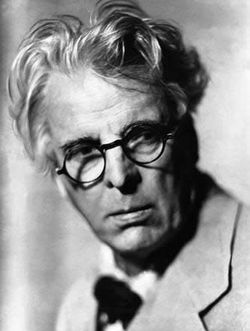
"'The great Irish poet William Butler Yeats has said that true education is not the filling of a bucket, but the lighting of a fire.' What does this mean to you?"--Professor Filiatreau quoting Dr. Steven Hake, "A Burning Flame" (lecture, Patrick Henry College, 2006)

With the use of these two metaphors, Yeats encompassed the whole of two scholastic philosophies that are diametrically opposed. Those who view education as merely the filling of a bucket educate only because they believe it is the duty of young folks to learn and, therefore, teaching falls to their elders. This rather shallow view of education results in disgruntled student body who considers high school a drudgery and college an escape from the reality of adult life. It is no wonder the young feel a lack of purpose and a lack of discipline that leads to vague discontentment. They have been fed facts and figures that they are "supposed to know," but have never been taught the joy of learning or the purpose, the use to which their acquired knowledge should be put.

In contrast, those educators who espouse Yeats's view concentrate on lighting the fires of passion and purpose in the souls of their pupils. For without purpose and passion, we cannot fully experience the joys and blessings inherent within personhood. Yes, the second group of teachers fills their students' heads with the same dull data. In fact, they are able to cram much more knowledge into the same space by teaching their students to think and enjoy learning. Not only do their students have the necessary knowledge, but they also have the necessary character, logic, and discernment. In short, they have the wisdom necessary to fulfill their purpose for being. It is no wonder, then, if the twin fires of passion and purpose burn higher, wider, and longer than their early mentors could ever have imagined.

The proper education is important to our ability to choose the proper changes. Without the wisdom gained from a good education, we could not know whether the changes we made would be good or bad. So let us have a passion for learning and for improvement!

Note: This post has been modified from a discussion board post completed in 2011 for credit through Patrick Henry College, by Leticia Ash.

Thursday, August 11, 2011

Choosing Change through Rebellion

Rebellion is the act of mentally or physically defying the expectations an individual or society has set for one. Although rebellion is normally bad, this is not always the case. God said through Samuel in I Sam. 15:23 that "rebellion is as the sin of witchcraft."

Clarifying the definition of sinful rebellion as defiance of the expectations God has set for us frees us from obligations to follow the rest of society. In fact, there are certain classes of people who must disobey the traditional social conventions of their set in order to follow God. Most of these conventions have resulted from the low expectations modern philosophy has set for humans in general.

Defying low expectations takes special courage and watchfulness. It takes courage to reach for a higher goal when everyone around you is sitting in mediocrity and is content to let you do the same.

Making the decision to follow God, even in defiance to others' expectations, raises the bar considerably. Not only are you measuring against a higher standard—God's standard—but you are also an example to those around you of what it means to follow God. That is a grave responsibility, and it requires constant watchfulness to maintain godliness.

Alex and Brett Harris have written the books Do Hard Things and Start Here. The rebelution resulted: a movement that they define as "a teenage rebellion against low expectations." Teenagers and young adults, however, are not the only ones who must rebel against society's expectations in order to follow God. Adults must rebel by living within their means and not trying to keep up with the Joneses, by being faithful to their obligations. Men must rebel by being strong men, taking the strong leadership role God has given them, and leading with God's will and consideration for his family at the forefront of his mind. Women must defy social convention in order to seek God's best by submitting themselves to a godly husband, keeping the home, and raising children who will seek to follow God in spite of contrary social expectations. Redheads are expected to be hotheaded. Whites are expected to be prejudiced against non-whites. Blacks are expected to be lazy and hostile. Living for God means having the faith, courage, and watchfulness to rebel against low expectations set for us, looking only to God's will for our validation and fulfillment.

Thursday, May 12, 2011

Speculation: A Path to Ultimate Ruin

"Money is so far useful to the public as it promoteth industry, and credit having the same effect is of the same value with money; but money or credit circulating through a nation from hand to hand without producing labour and industry in the inhabitants, is direct gaming." (Berkeley, 1721, 71) Private capitalism allows individuals and nations to gain great wealth if they work hard enough to earn it; however, it can collapse into ruins if corrupted through imprudent business practices. One such practice, investment speculation, should be scrupulously avoided because it endangers the stability of our economy as well as the financial and spiritual well-being of individuals.

In order to assess the harmful effects of investment speculation, it is necessary first to differentiate speculation from other forms of investing. Charles H. Brandes (1998, xv), in his book Value Investing Today, references the following definitions of both investing and speculation given by Sereno S. Pratt in The Work of Wall Street: "when a 'security is bought and paid for in full, put away in a place of safe keeping, and held for the income it produces—that is called an investment.' But, when it 'is held for sale as soon as the price advances—that is speculation.' [Brandes] would add: (1) any contemplated holding period shorter than a normal business cycle (three to five years) is speculation, and (2) any purchase based on anticipated market movements or forecasting is also speculation."

The most obvious reason to avoid investment speculation is the personal ramifications of the motivations and practices involved and the results that they produce. Greed is the first motivation involved in speculation. Every person seeking to make a large profit is not necessarily greedy, but greed does lead people to seek investments promising "something for nothing." Another motivation toward investment speculation is the wish to harm others or the economy as a whole. Investors who have extensive capital are capable of driving consumer prices to extremes. By predicting downtimes it is possible to influence investors to pull their money out of the market and cause a financial crisis. It is also possible to invest enough in a particular commodity to drive its price higher or to predict a good future, influence others to invest, and sell stocks back to those same investors for a much higher pricer than one originally paid for them. This is a practice which very rich investors can sometimes use to rob the entire economy and stick the profits in their own pockets.

Multiple practices relating to investment speculation also have undesirable consequences. First, the practice of financing investments is unethical. When one does this, he is risking someone else's money, in effect, and has dishonestly promised to repay something that he is not currently able to repay. The apostle Paul admonished the Romans, "Owe no man any thing. . . ." (Rom. 13:8 KJV) Therefore, it is not only unethical, but also unscriptural to finance one's investments. This practice is also unsound financially because if an individuals investments do perform well, he will still be responsible to repay the loan. Second, buying or selling multi-level marketing products in order to collect enormous gains from consumers is an unethical practice. Some people are enticed to invest in such deceptive marketing schemes by greed and some for more ethical reasons, but this type of investment practice is always potentially illegal no matter the motivation. This practice is unwise since it is possible that one may not sell the product and will be out the amount he has invested.

Finally, there are some distressing results that come from investment speculation. Addiction to such forms of speculation as gambling is one possible result. Gambling includes a variety of practices. Playing the lottery is one that is obviously habit-forming, but others that may seem innocent can be addictive as well. Being under the force of addiction is unethical because one becomes the servant of the habit, making it a sort of idol. As Jesus said in the Sermon on the Mount, "Ye cannot serve God and mammon." (Matt. 6:24) Another unpleasant result of investment speculation is bankruptcy. Though not directly causative, speculation and the debt in which speculators often find themselves could be a factor in the bankruptcies that are so common today. Bankruptcy not only has great financial consequences, but it also results in effectively stealing from one's creditors. The consideration of these unwise and unethical motivations, practices, and results must surely force all reasonable persons to avoid investment speculation for conscience's sake, regardless of all other considerations.

However, a second reason why investors should avoid investment speculation is because it serves as the first step toward the economic failure of a nation. Most speculators quickly accumulate debt, which is the second step toward a financial crisis, because they are no longer content to speculate with money that they can honestly spare and maintain their present standard of living. Once this debt becomes unmanageable, they begin to fall behind and cause financial difficulties within the companies that they owe. Unrealized gains may cause those who are deeply indebted to call for pay raises. As a result, businesses fail due to the lack of capital and their employees' cries for higher wages to repay their individual debts.

If enough businesses fail, the government often increases the amount of money in circulation. Thus, the consumer debt feeds inflation. This inflation, which is in fact the third step toward an economic downturn, at first appears to be beneficial because it increases the worth of money while leaving the amount of debts that were previously accrued stationary. If one truly analyzes the situation, however, he will soon find that the cost of living does not remain stationary. Increased wages may throw some workers into a higher tax bracket, while forcing employers to raise their prices in order to cover expenses and still make a profit. This, in effect, negates any assistance that inflation might otherwise yield to the common man regarding his debt; and "as long as households, corporations, and governments borrow and spend excessively, we remain on course for more inflation. . . ." (Brandes, 1998, 178-179) The brighter side of inflation is that as wages and the cost of living rise, the stock market and the value of any investments one might have rise along with them.

Eventually, however, the stock market stops growing and the thousands that quickly remove their earnings to protect them from the imminent drop in prices actually precipitate the collapse. That drop can lead into a recession, depression, or even, in the most severe cases, complete economic failure. This is the final step in the process of financial ruin—speculation, debt, inflation, and economic crisis.

Finally, one should review several incidents in American history that serve as proof of the correlation between investment speculation and economic instability—the Panic of 1819, the Panic of 1837, the Panic of 1873, and the Great Depression. According to the authors of United States History: Heritage of Freedom (1996, 182), early speculators saw an opportunity for profit when the United States acquired some Western lands from Britain after the War of 1812. Since pioneers were eager for new land, speculators could borrow large amounts, buy land, and sell it to others with enough profit to pay for their debts. The fact that both speculators and farmers were competing for the land and that the speculators needed to repay their loans inflated land prices far above the actual demand. Upon assessing its risk, the Bank of the United States decided to make fewer loans, causing fewer people to buy the land. The prices dropped immediately, and the Panic of 1819 had begun. Thus, the speculators' practice of buying land on credit led directly to financial crisis.

According to a latter portion of the same book, speculation on Western lands also caused the Panic of 1837, though under slightly different circumstances. When speculation had caused extensive inflation of land prices between 1832 and 1836, President Andrew Jackson became concerned about risky loans being made by unstable banks. Consequently, he approved the passage of the Specie Circular, which stipulated that Western lands could only be purchased with gold or silver. This limitation of the number who could buy land from speculators lowered the land's worth and left investors with huge debts in the midst of the Panic of 1837 and an ensuing depression ending in 1843. Investment speculation had again resulted in financial crisis. (Lowman, Thompson, & Grussendorf, 1996, 201-203)

After the Civil War, the federal government began a massive expansion of the railroads. The first transcontinental railroad was finished on the tenth of May, 1869 (Lowman, Thompson, & Grussendorf, 1996, 332); soon another one was under construction. Multiple web sites mentioned that financing for the Union war effort and both transcontinental railroads had been obtained through a European firm called Jay Cooke and Company, but speculators had also invested heavily in these ventures. On September 18, 1873, Jay Cooke and Company announced its bankruptcy and terminated its funding of the Northern Pacific Railroad. Suddenly, many speculators removed their capital from the project, causing the prices of railroad stock to drop suddenly, thereby initiating the Panic of 1873. This panic soon deepened into a depression which lasted into 1878. For a third time in American history, speculation had caused a downturn in the economy. (Medina, 2000-2009, "The Panic of 1873") (NWTravel, 2009, "Panic of 1873—Social Issues")

In the early 1920s, speculation was quite common, as mentioned in the book United States History (Lowman, Thompson, & Grussendorf, 1996, 534-535). The only difference was that speculators of this period invested in the stock market rather than in land or railroads. These investors incurred even more risk than previous ones by purchasing stock "on margin," driving inflation up again. Eventually, when the market prices stopped rising, investors sold huge numbers of shares at once, causing such a drastic drop in prices that the stock market crashed on Black Tuesday, October 29, 1929. This is another incident in which speculation led to economic instability within the nation and ultimately initiated the Great Depression.

An investigation of investment speculation and its objectionable effects proves that it endangers individual spirituality and personal financial gain along with the capitalist economic system. Investment speculation is detrimental to the free market because it always leads to national debt, inflation, and economic crisis; to personal gain because it raises consumer debt and increases bankruptcy levels; and to individual spiritual growth through greed, dishonesty, addiction, and thievery.


Note: The above essay was written as part of a college application for Patrick Henry College in 2010, by Leticia Ash.


References

Berkeley, G. (1721): 71: "An Essay Towards Preventing the Ruin of Great Britain." McCann, C. R. (Ed.). (2003). The Elgar Dictionary of Economic Quotations, 14-15. Book on-line. Northampton, MA: Edward Elgar Publishing. Internet. Accessed 3 November 2009.

Lowman, M. R., Thompson, G., & Grussendorf, K. (1996). United States History: Heritage of Freedom, 2d ed. Pensacola, FL: Pensacola Christian College.

Medina, Miriam. (2000-2009). The History Box. "The Panic of 1873." http://

www.thehistorybox.com/ny_city/panics/panics_article9a.htm. Accessed 2 October 2009.

NWtravel. "Panic of 1873—Social Issues" Magazine on-line. Internet. Accessed 2 October 2009.

Pratt, S. S. (1903). The Work of Wall Street. New York: Appleton, 1903. Quoted in Brandes, C. H. (1998). Value Investing Today, 2d ed. New York: McGraw-Hill.


Monday, August 16, 2010

Martin Luther: He Became the Change

Martin Luther became the change that he saw as necessary during the European Renaissance. Luther was born November 10, 1483, and was baptized into the Catholic Church the next day. He entered college in 1501 and completed his Master's degree by 1504. This German college student became an Augustinian monk only one month after his famous vow made during a thunderstorm in 1505.

Five years later, Martin Luther walked with several other monks to Rome where he realized that many church leaders were corrupt and that works of penance alone could not save him. Dr. Luther became a professor at the University of Wittenberg in 1512. He was so highly respected that he was elected as a district vicar of monasteries in 1515. Only two years later, Martin Luther nailed his Ninety-five Theses to the church door in Wittenberg on October 31, 1517. This is often cited as the beginning of the Protestant Reformation, when Luther became a Protestant.

The next year, Dr. Luther wrote to the Pope protesting a papal bull allowing the sale of indulgences. In 1519, he gathered a group of students and faculty who held a large bonfire to burn books including Catholic doctrines with which they did not agree. After Luther admitted that some Hussite opinions were Biblical in a debate with another Catholic, he was summoned to the Diet of Worms, which began on January 21, 1521, and lasted for four months before Luther finally left. As he traveled home, a German prince who chose to hide Martin Luther in Wartburg Castle for several years kidnapped him. While there, Dr. Luther wrote a German translation of the New Testament as well as papers on the Peasants' Revolt and the errors inherent in vows monks and nuns were forced to make. He became the change he thought necessary when he left his priesthood in 1521 and when he married a former nun, Catharine von Bora, on June 13, 1525. They had several children, and Martin Luther continued to lead the German Reformation until his death in February of 1546.

Dr. Martin Luther (1483-1546) saw several unscriptural doctrines being preached and practiced within the Roman Catholic Church. He became the change by challenging these doctrines in the Ninety-five Theses and by refusing to live by his former monastic vows. As a result, Luther began the Protestant Reformation and became the change he sought within the Catholic Church. More than five hundred years later, we still remember Martin Luther because he became the change.

Tuesday, August 3, 2010

Who Has Become the Change?

This is an announcement of the new series I plan to post over the next month or two, called "They Became the Change." I hope to write at least five articles highlighting innovative leaders from the past and present who exhibit the meaning of positive change and provide an example of how to become that change. If you recall hearing of someone having these qualities, please leave a comment mentioning him. After researching your suggestions, I may expand the series to highlight more exceptional personalities.

Friday, July 16, 2010

Making or Becoming Different

Young people today (as have young people of all times) have the courage and enthusiasm necessary to "change the world" forever. These attitudes are the unique contribution of our generation, but we do not always use them wisely. Many young people choose rebellion against all social norms as their method for changing the world around them, but rebellion does not bring the satisfaction they seek. Rather, rebellious children grow into selfish, unfulfilled adults who then attempt to force their own disillusionment on following generations.

There is a proper way of harnessing the energy of today's youth to make this world a better place; it does not consist solely in making the world different, but rather in becoming different ourselves. We must take responsibility for the change. Following the cultural norms for adolescents will not achieve this goal, nor will rebelling against all cultural institutions; but there is a way. We must be visionary and do hard things (as Alex and Brett Harris advise us) by becoming the change this world needs. Making and becoming different are actually the same thing in this case because becoming different is the only way to make a difference.

Tuesday, April 13, 2010

What Is Change?

In order for our generation to be able to choose change wisely, we must first discover what change is and whether a particular change would be beneficial or not. Change is "making or becoming different, exchange or replacement, variance from routine, coins, money given back, money exchanged for higher denomination. . . transition from something, . . . ." Certain changes are necessary and beneficial, but others are equally undesirable.

While risk is inherent within change (as we may see through the potentially devastating effects of change), there is also risk in remaining stationary. We must assess and weigh the risks of each proposed change in order to choose whether, in that particular situation, it would be better to change or to remain the same. Our embracing any change, just because it is change and claims that it will bring progress, is not apt to bring the results that we would likely choose upon further reflection. We must be willing to risk change for progress, but we must also be cautious in choosing those changes lest they send us "[f]orward, forward, ay, and backward, downward too into the abysm!"